Quote from GamerMomLuna on March 31, 2026, 10:00 am
Every once in a while, you meet a creator whose work feels less like a project and more like a calling. That’s what it was like sitting down with Anangookwe L. Hermes‑Roach (she/they), the creator behind Reclaim! Azhe‑giiwewining. Within minutes, it was clear this game wasn’t built around a concept, but built around a community, language, and a deep sense of responsibility.
Reclaim! Azhe‑giiwewining: A Game About Finding Your Way Back
Every once in a while, you meet a creator whose work feels less like a project and more like a calling. That is what it was like sitting down with Anangookwe L. Hermes‑Roach (she/they), the creator behind Reclaim! Azhe‑giiwewining (pronounced uh zhay gee‑way‑wining, meaning "returning home"). Within minutes, it was clear this game was not built around a concept. It was built around a community, a language, and a deep sense of responsibility.
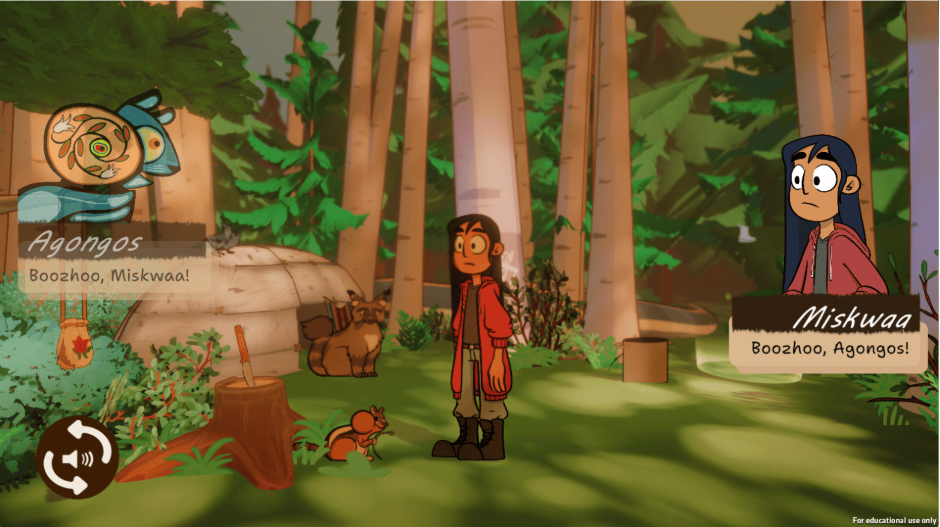
Reclaim! is a point‑and‑click narrative adventure rooted in Ojibwe culture, language, and tradition. It runs roughly three hours, possibly a little less. Players follow Miskwaa, an Ojibwe girl who awakens in a living forest where language becomes the key to finding her way home. Along the way, players encounter intricate puzzles, colorful citizens, and stories inspired by Anishinaabe tales and teachings. It’s an entire adventure that celebrates the language and the history of the Ojibwe, and it is done in a way that proudly announces their existence and their importance. It is a story about reclaiming language, culture, and identity in a world where those things have been interrupted, scattered, or taken. It is about reconnecting and inviting others to reconnect alongside you.
One of the most striking choices the team made is that all spoken dialogue is recorded in Ojibwemowin, while the on‑screen text appears in English. This centers the language without shutting players out. You hear Ojibwemowin as a living, breathing language. It is not a translation or a token phrase. It is the voice of the world itself.
What “Reclaiming” Means Here
When Anangookwe talks about reclaiming, it is not in the abstract sense. Reclaiming means:
Bringing Ojibwe language into everyday life
Creating space for people who are learning or reconnecting
Showing contemporary Indigenous life as it actually is
Making a game that feels like an open door rather than a closed circle
There is a generosity to the way Anangookwe describes it. The game feels like a place you are invited into, not a world you have to earn your way into.
Building Culture Without Turning It Into a Gimmick
One of the things Anangookwe was most intentional about was avoiding the “mystical Indigenous character” trope that is often shown in the media. Instead, the team built Reclaim! through community workshops with language learners and gathered ideas directly from the people the game represents.
They also worked closely with an elder who ended up voicing a character. This was not a novelty. His presence and perspective genuinely shaped the story. The result is a game that feels lived in rather than stylized. It feels cultural rather than caricatured.
Shaped by Family and Community
Something I did not expect going into the conversation is that Reclaim! is, in many ways, a family project.
Anangookwe co‑directed the game with her mother, who is married to the lead writer. That intergenerational collaboration shows up in the game’s emotional core. There is a sense of returning, reconnecting, and carrying things forward. It is not just a story about home. It was made at home.
Built for Language Revitalization
Reclaim! Azhe‑giiwewining is developed by the nonprofit studio Grassroots Indigenous Multimedia. That mission‑driven foundation is present in every part of the game. Designed collaboratively with Ojibwe community members and language activists, the game contributes to a growing movement to revitalize Ojibwemowin and present it as an accessible and relevant language today.
This is not simply a game that includes Ojibwemowin. It is a game that actively participates in keeping the language alive.
What Players Outside the Culture Might Take Away
One of the most moving things Anangookwe shared was a story about an Armenian player who cried after finishing the game. They saw their own community’s history reflected in the themes of loss, resilience, and reconnection.
That is the kind of response she hoped for. The game is not trying to universalize Indigenous experience, but sincerity tends to resonate across cultures. Think of Undertale, but rooted in Ojibwe life.
The Industry Is Changing Slowly
We talked about the broader landscape of culturally grounded games, and Anangookwe was honest. Yes, things are shifting, but there is still a long way to go.
Games like Never Alone paved the way. Even large titles like Civilization VII introducing Indigenous leaders matter. But Reclaim! pushes the conversation further by centering Indigenous authorship rather than representation alone.
Early Reactions That Hit Home
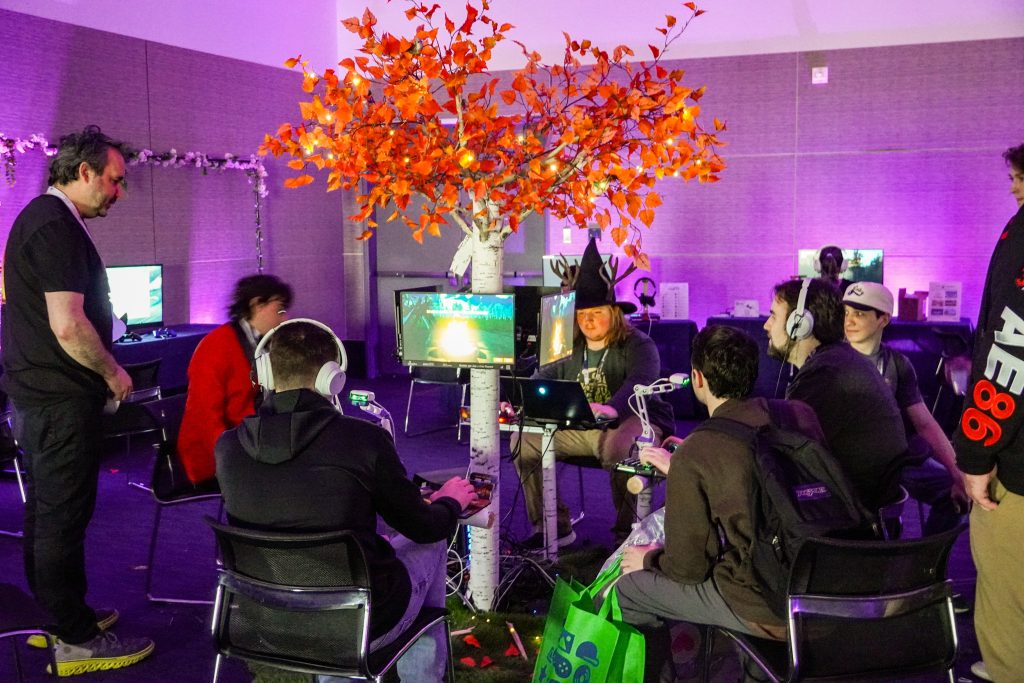
The game launched on Thursday, 3/26/26, and the team has been soaking in the early reactions. Players are laughing at the jokes, sending emotional messages, and sharing how they see themselves reflected in the story. For Anangookwe, those moments are the ones that stay with her. The quiet “I felt this” comments, unexpected connections, and the sense that the game is doing exactly what it set out to do.
At its core, Reclaim! is about coming home to language, to culture, and to yourself. It is also about creating a space where others can come home too, whether they share that culture or are simply meeting it with respect and curiosity.
It is a reminder that games can be more than entertainment. They can be bridges. They can be healing. They can be reclamation.
Every once in a while, you meet a creator whose work feels less like a project and more like a calling. That’s what it was like sitting down with Anangookwe L. Hermes‑Roach (she/they), the creator behind Reclaim! Azhe‑giiwewining. Within minutes, it was clear this game wasn’t built around a concept, but built around a community, language, and a deep sense of responsibility.
Reclaim! Azhe‑giiwewining: A Game About Finding Your Way Back
Every once in a while, you meet a creator whose work feels less like a project and more like a calling. That is what it was like sitting down with Anangookwe L. Hermes‑Roach (she/they), the creator behind Reclaim! Azhe‑giiwewining (pronounced uh zhay gee‑way‑wining, meaning "returning home"). Within minutes, it was clear this game was not built around a concept. It was built around a community, a language, and a deep sense of responsibility.
Reclaim! is a point‑and‑click narrative adventure rooted in Ojibwe culture, language, and tradition. It runs roughly three hours, possibly a little less. Players follow Miskwaa, an Ojibwe girl who awakens in a living forest where language becomes the key to finding her way home. Along the way, players encounter intricate puzzles, colorful citizens, and stories inspired by Anishinaabe tales and teachings. It’s an entire adventure that celebrates the language and the history of the Ojibwe, and it is done in a way that proudly announces their existence and their importance. It is a story about reclaiming language, culture, and identity in a world where those things have been interrupted, scattered, or taken. It is about reconnecting and inviting others to reconnect alongside you.
One of the most striking choices the team made is that all spoken dialogue is recorded in Ojibwemowin, while the on‑screen text appears in English. This centers the language without shutting players out. You hear Ojibwemowin as a living, breathing language. It is not a translation or a token phrase. It is the voice of the world itself.
What “Reclaiming” Means Here
When Anangookwe talks about reclaiming, it is not in the abstract sense. Reclaiming means:
Bringing Ojibwe language into everyday life
Creating space for people who are learning or reconnecting
Showing contemporary Indigenous life as it actually is
Making a game that feels like an open door rather than a closed circle
There is a generosity to the way Anangookwe describes it. The game feels like a place you are invited into, not a world you have to earn your way into.
Building Culture Without Turning It Into a Gimmick
One of the things Anangookwe was most intentional about was avoiding the “mystical Indigenous character” trope that is often shown in the media. Instead, the team built Reclaim! through community workshops with language learners and gathered ideas directly from the people the game represents.
They also worked closely with an elder who ended up voicing a character. This was not a novelty. His presence and perspective genuinely shaped the story. The result is a game that feels lived in rather than stylized. It feels cultural rather than caricatured.
Shaped by Family and Community
Something I did not expect going into the conversation is that Reclaim! is, in many ways, a family project.
Anangookwe co‑directed the game with her mother, who is married to the lead writer. That intergenerational collaboration shows up in the game’s emotional core. There is a sense of returning, reconnecting, and carrying things forward. It is not just a story about home. It was made at home.
Built for Language Revitalization
Reclaim! Azhe‑giiwewining is developed by the nonprofit studio Grassroots Indigenous Multimedia. That mission‑driven foundation is present in every part of the game. Designed collaboratively with Ojibwe community members and language activists, the game contributes to a growing movement to revitalize Ojibwemowin and present it as an accessible and relevant language today.
This is not simply a game that includes Ojibwemowin. It is a game that actively participates in keeping the language alive.
What Players Outside the Culture Might Take Away
One of the most moving things Anangookwe shared was a story about an Armenian player who cried after finishing the game. They saw their own community’s history reflected in the themes of loss, resilience, and reconnection.
That is the kind of response she hoped for. The game is not trying to universalize Indigenous experience, but sincerity tends to resonate across cultures. Think of Undertale, but rooted in Ojibwe life.
The Industry Is Changing Slowly
We talked about the broader landscape of culturally grounded games, and Anangookwe was honest. Yes, things are shifting, but there is still a long way to go.
Games like Never Alone paved the way. Even large titles like Civilization VII introducing Indigenous leaders matter. But Reclaim! pushes the conversation further by centering Indigenous authorship rather than representation alone.
Early Reactions That Hit Home
The game launched on Thursday, 3/26/26, and the team has been soaking in the early reactions. Players are laughing at the jokes, sending emotional messages, and sharing how they see themselves reflected in the story. For Anangookwe, those moments are the ones that stay with her. The quiet “I felt this” comments, unexpected connections, and the sense that the game is doing exactly what it set out to do.
At its core, Reclaim! is about coming home to language, to culture, and to yourself. It is also about creating a space where others can come home too, whether they share that culture or are simply meeting it with respect and curiosity.
It is a reminder that games can be more than entertainment. They can be bridges. They can be healing. They can be reclamation.