At Shadomain we love having discussions with anyone interested in games and having more fun. We’ll suggest interesting topics for discussion in our groups and publish comments here and talk about them in our YouTube channel. If you want to add some comments to our discussions, join our private email group by sending an email to sh**********@***il.com or join our Discord.
The Topic: Strategic Monsters?
Keith Ammann’s blog and books (such as The Monsters Know What They’re Doing) extrapolate the stat blocks and descriptions of monsters from D&D to show DMs how to use monsters effectively. He answers questions such as “What does this creature want?” and “How would it use it’s abilities?”. Do you expect that game books include this type of GM advice for every creature listed? Do you find this advice useful?
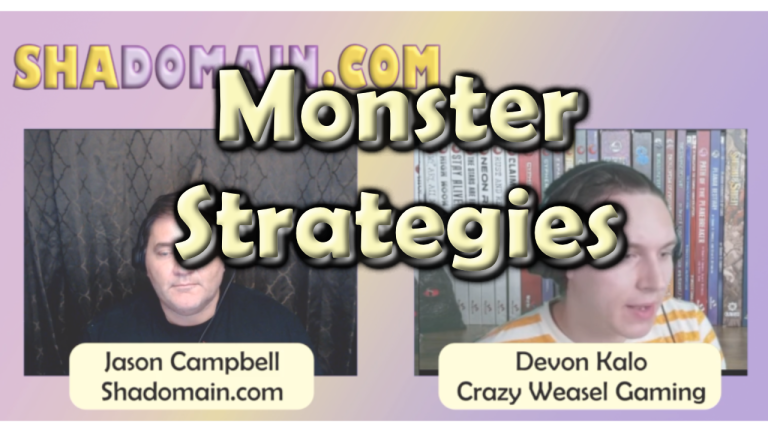
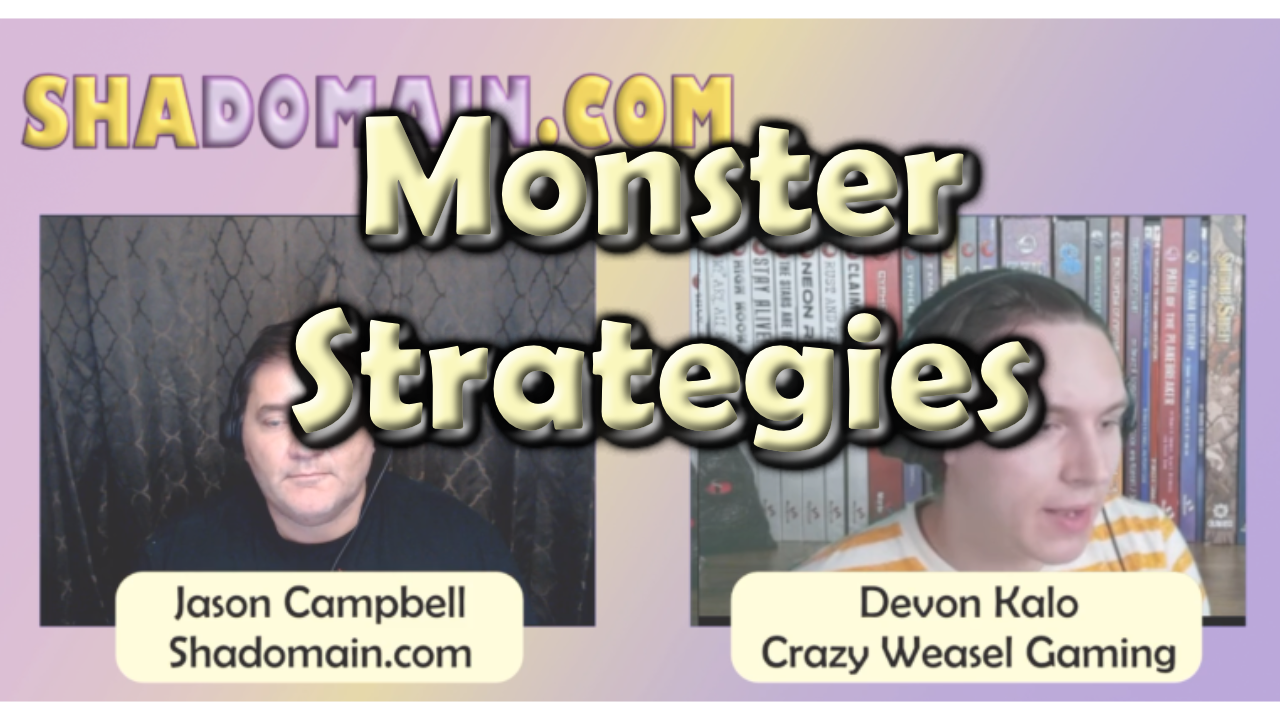
We talked with Devon from Crazy Weasel Gaming about using these deeper strategies and whether that info should always be in a m onster book.
Check out this show on YouTube.
Some Cool Responses
I love when books put this sort of information in. Not that I will always use it, as my world might be different, or I might be reskinning a creature. It makes monster manuals a far more interesting casual read, rather than just a reference list. And makes me far more likely to buy them as well as pick them up once I do.
Sir James
It can be useful. I don’t expect it, and don’t really feel like I need it, but I’ve been doing this a while now. Especially for complex foes, advice on how they react can be helpful, though I read an interesting counter blog article called ‘The Monsters Do Not Know What They’re Doing”, written by a combat veteran, talking about the chaos of armed conflict, and the often random or nonsensical responses real thinking animals engage in when faced with deadly force. it pointed out that how cool and calculated an enemy’s response is can be a dial that the GM can shift up or down depending on what they want from the encounter, and the feel of the foe.
The Merlitron
Having read a few of his books, I really like his approach to monster design. I do think it is valuable for designers to consider not just what the monster does, but how it behaves. This gives the world a little more believable feel, and it helps GMs use monsters to their maximum effect
Devon from Crazy Weazel Gaming
Wrapping It Up
Whether this sort of information: What are they? Why are they? How are they? Belongs in the average monster rulebook is really a tough question. It can really inflate the page count of a book. Or it might mean you get less monsters in the book to make room for the strategy and background of the monsters.
And if you want to join our discussions, join our private email group by sending an email to sh**********@***il.com or join our Discord.
RPG News
We have some news from… from us! We’ll shortly be releasing a new adventure for Cypher (2026) from Monte Cook Games: The Horrors of Pinocchio—Across the Fableverse is a dimension spanning adventure where the heroes fight through different genres in their quest to stop the supervillain Gepetto and save Pinocchio, with a bit of luck. The adventure uses Monte Cook Games’ Cypher (2026) rules. Each character represents a trope (Guardian, Brain, Ally) and their Type changes as they transition from the genre of one dimension to another. The Horrors of Pinocchio—Across the Fableverse is a short adventure with rules to ensure the heroes arrive at the final conflict in a 2, 3 or 4 hour session—whether they’re ready or not.
Follow us on Social Media or check back here for the release schedule!
About the Author