

By Jason Campbell
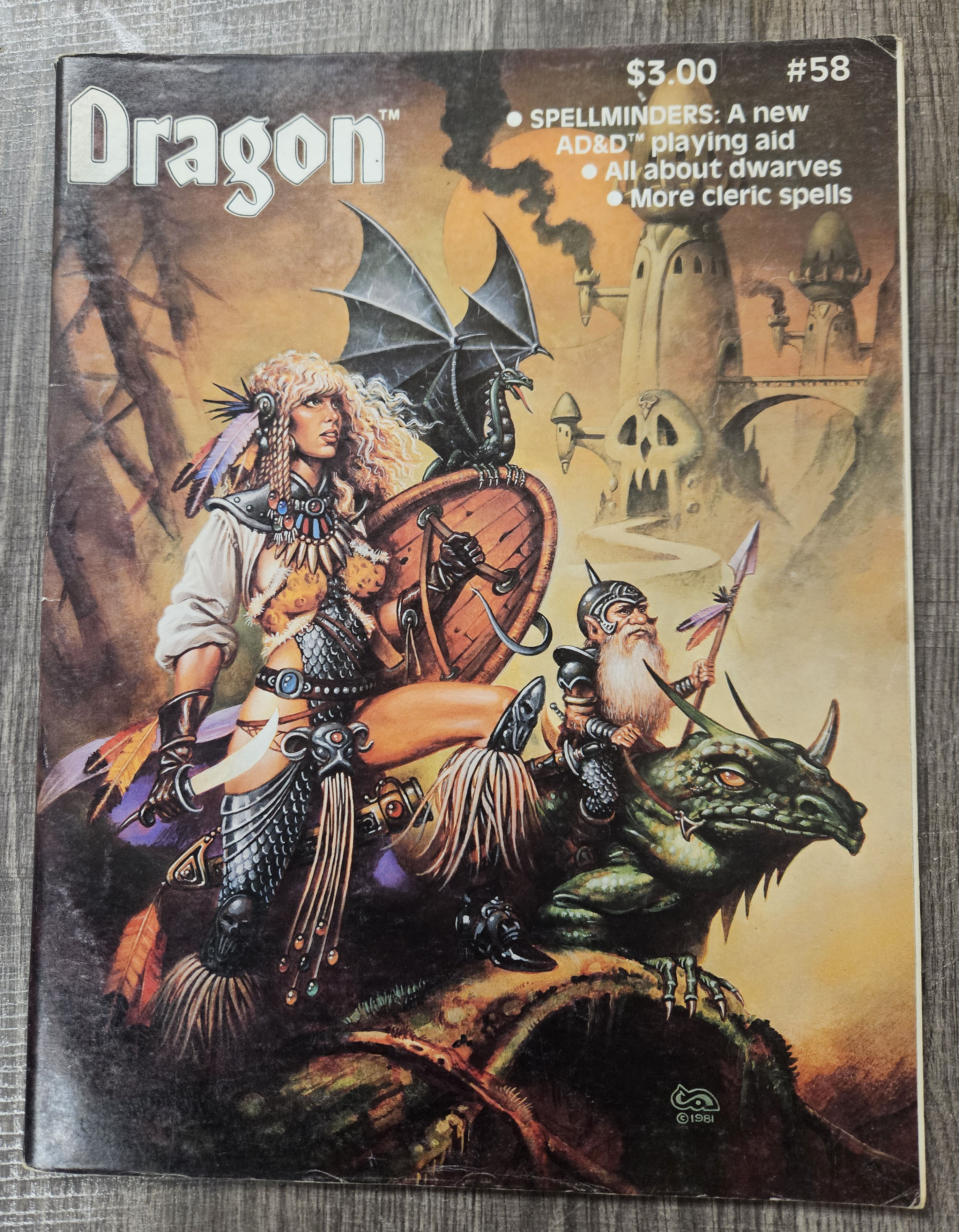
I first discovered Dragon magazine in the early 80s and soon had a subscription as an annual Chritsmas gift. Most of those issues fell victim over the years to my parents’ damp basement, but the image of that first issue – #58 – was forever burned into my memory, so I managed to purchase a copy of this issue at PaxUnplugged. Here’s some of the goodies inside.
Cover
The cover painting is typical of Dragon covers of the early 80s, it’s called “Escape From Skull Keep”, by Clyde Caldwell. This was only the second Caldwell cover painting that Dragon had published. At this time Kim Mohan was the editor and the issue featured articles by Len Lakofka, monsters created by Ed Greenwood and a short story by J. Eric Holmes, famous for editing the first Dungeons & Dragon Basic Set from 1977. The issue was 80 pages, which was average for the time.
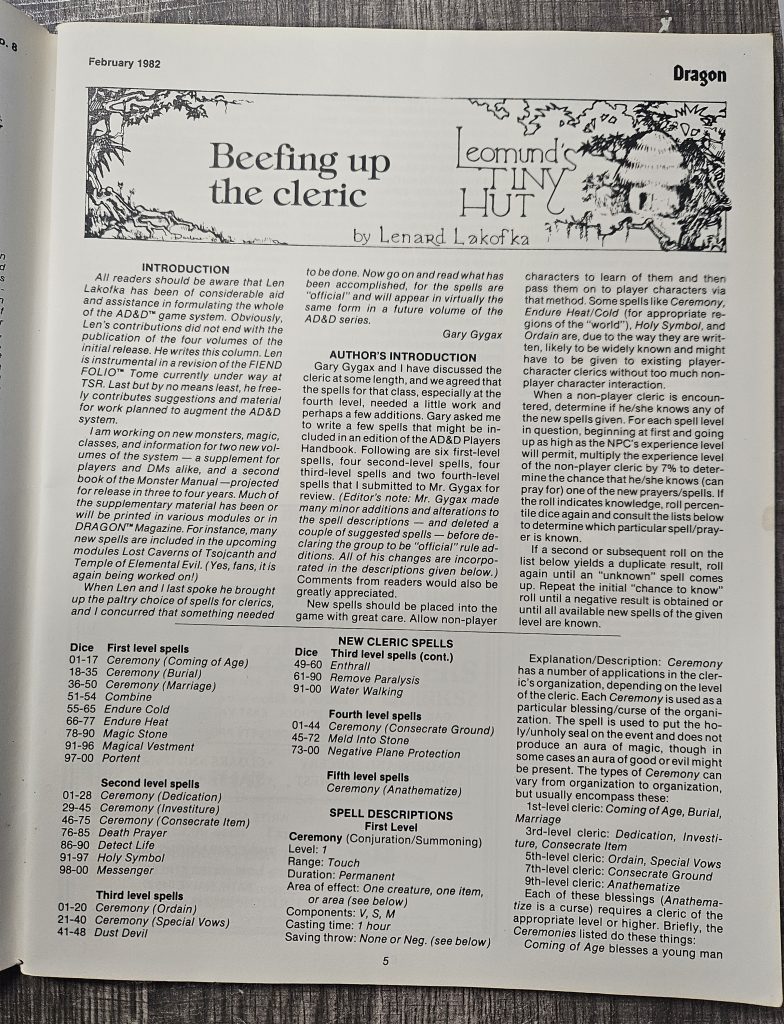
Leomund’s Tiny Hut
Leomund’s Tiny Hut was a recurring column by Len Lakofka giving rules additions and clarifications. In this issue the feature lists many new cleric spells. The article begins with a forward by Gary Gygax indicating that these new spells were “official” and would be featured in the next player’s book (which would later be Unearthed Arcana.)
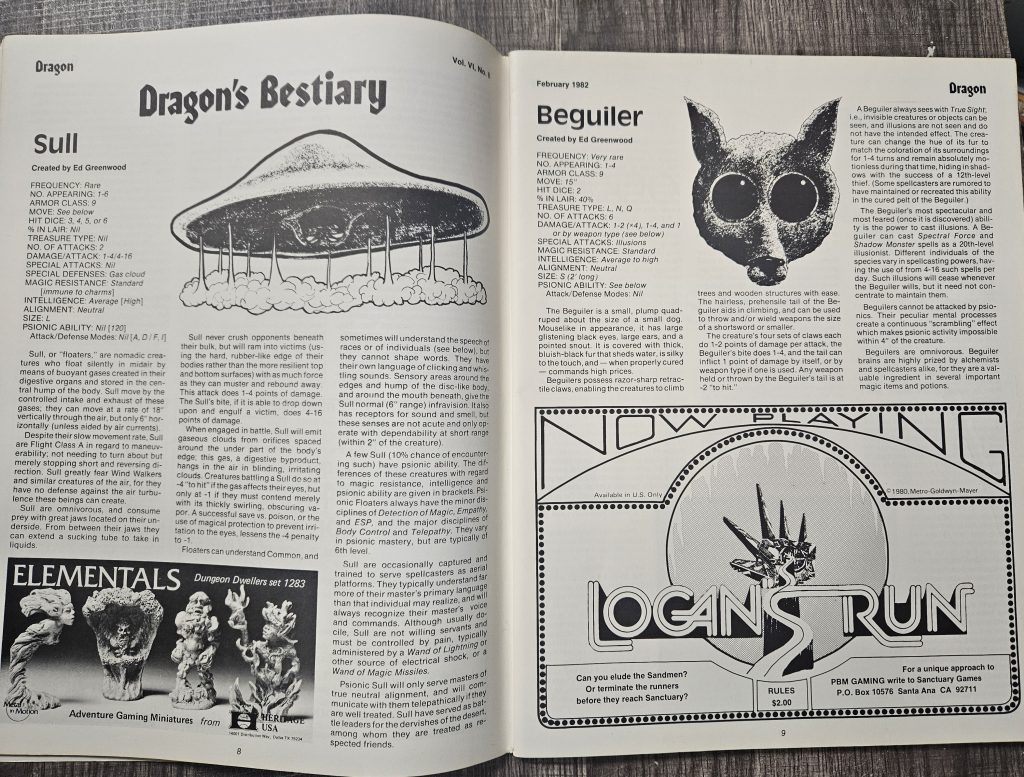
Dragon’s Bestiary
This Dragon’s Bestiary featured three new monsters for AD&D; the Sull and the Beguiler (designed by Ed Greenwood) and Magenta’s Cat (designed by Roger Moore) . The Sull was a sort of floating blob of varying size. The Beguiler was a small mouselike creature who had Truesight and the ability to cast illusions. Magenta’s Cat was a cat with psionic powers.
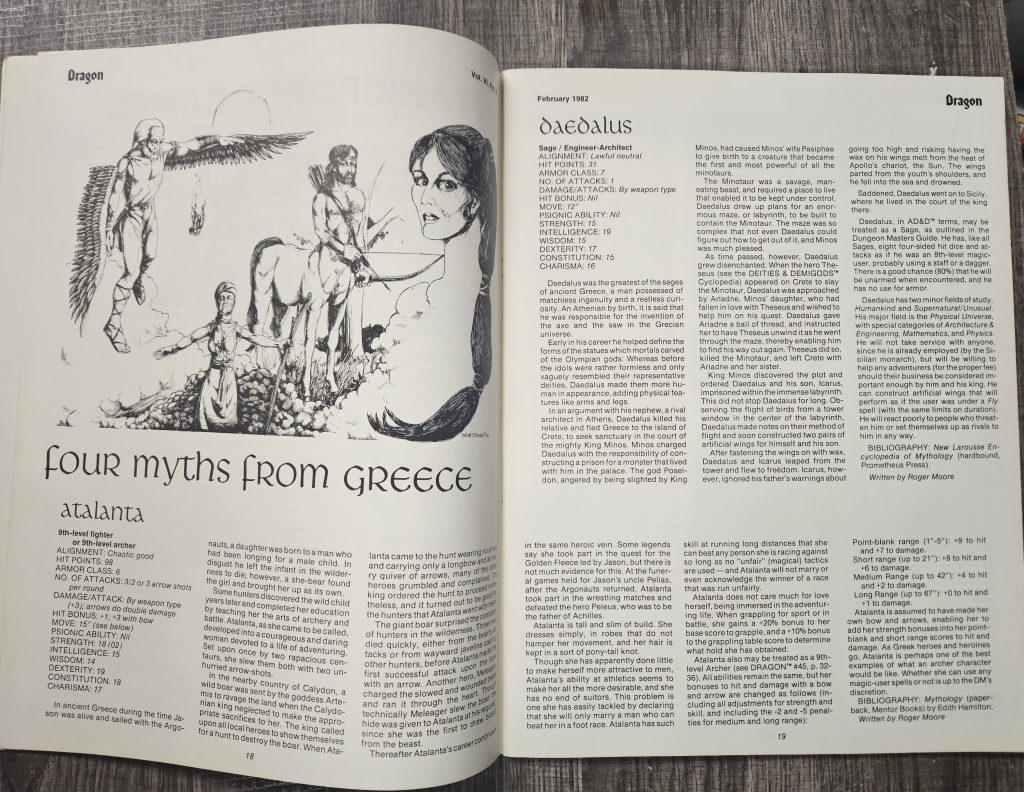
Four Myths from Greece
In addition to the Four Myths from Greece article the issue featured another article detailing Medusa and her lineage. The Four Myths covered are Atalanta, Daedalus, The Sybil of Cumae and Chiron.
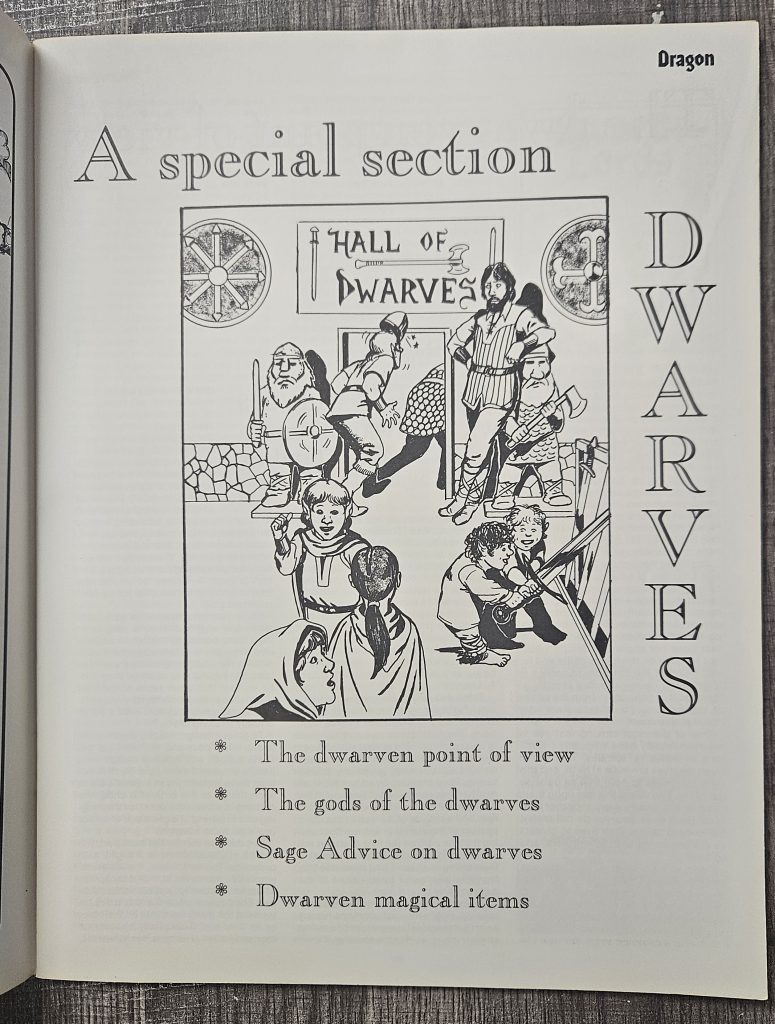
A Special Section: Dwarves
At the center of the magazine was a special section about dwarves. Dwarves were my favorite AD&D race, so I reread this many times. We get a long article by Roger Moore on the dwarven point of view, which helped to build a backstory for PCs or NPCs. There were two new magic items; High Anvil of the Dwarves, which adds efficiency and quality to armor and weapons forged with it, and the Helm of Subterranean Sagacity, which gives the wearer additional information about stonework.
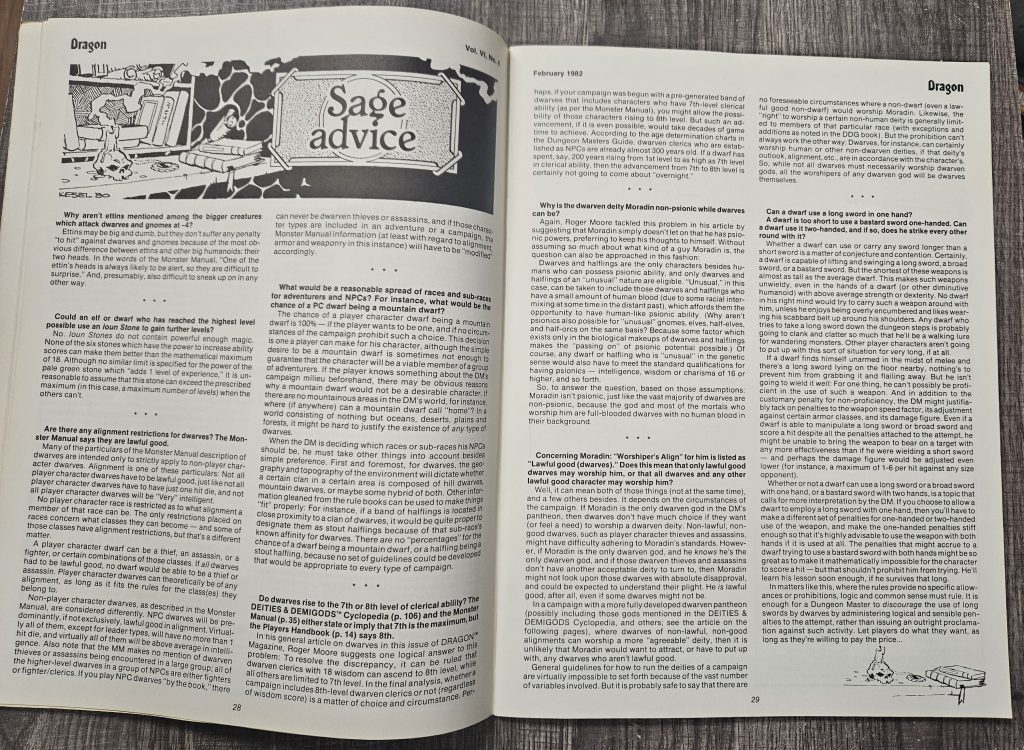
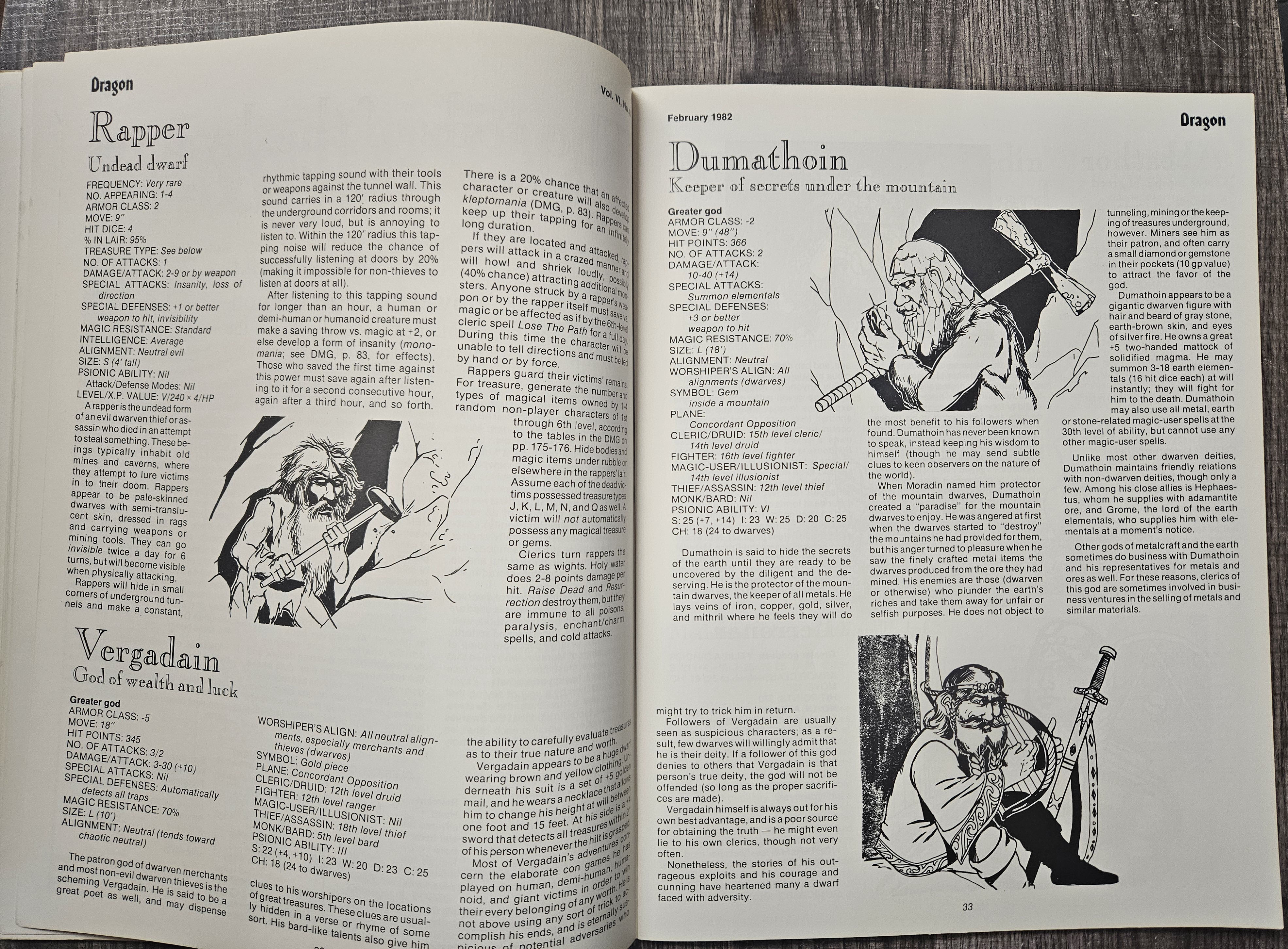
Sage Advice was a column answering questions from readers, and for this issue the column answered many questions about dwarves. Finally there were more dwarven gods detailed. This was important as the Deities and Demigods book only detailed one god for each demihuman race.
In the Bag
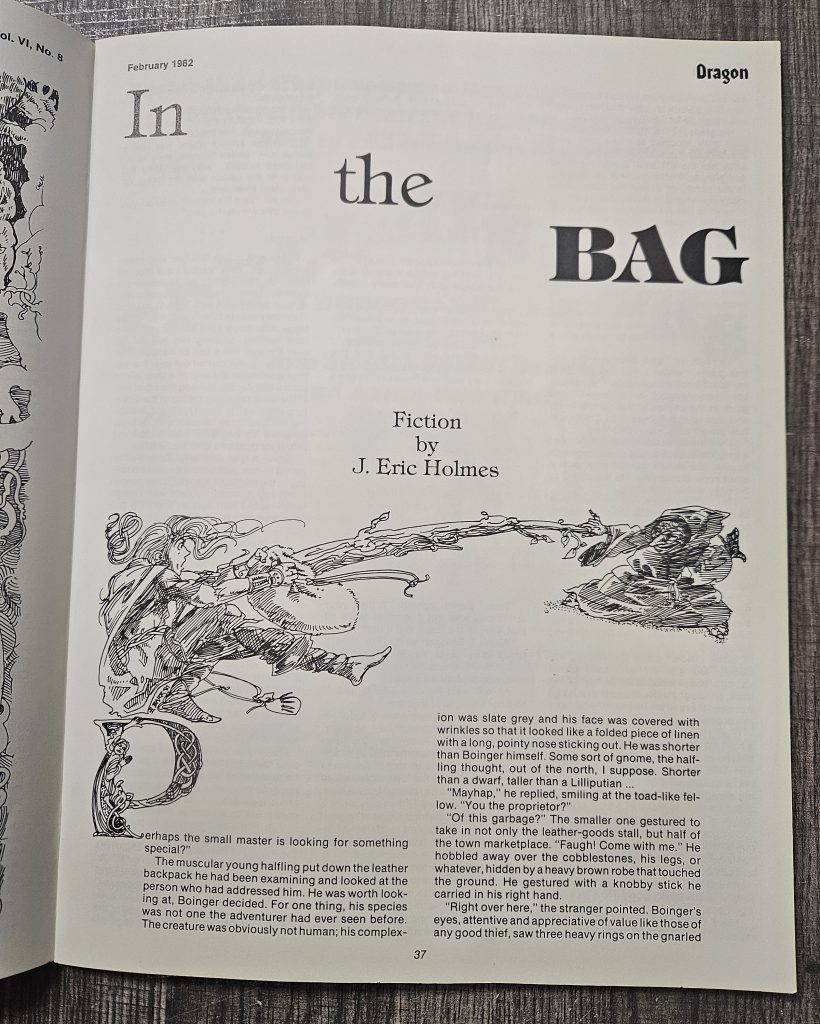
This was a short story by J. Eric Holmes. Short stories were common in these years of Dragon. This story was a tale about a halfling and a strange bag.
Spellminders
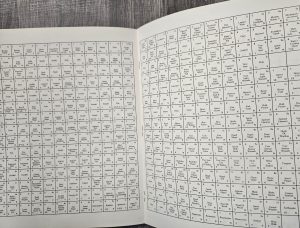
This section was a playing aid for AD&D. The pages had small squares listings of all the available spells, showing their level, casting time, range and saving throw. You could cut them out and use them in game to remember your PC’s spells or randomly determine which spells a scroll had. It might sound goofy but these pages were printed on card stock, so it would have cost a bit to produce this.
And More
There’s an article about using bows that aimed to make them more tactical but in play made them more powerful than other normal weapons. There’s an article on swords, from a historical perspective. These were popular articles at the time.
Additionally there’s an article about optional species to play in the Traveller roleplaying game. Although most of the Dragon would be about AD&D, there were occasional articles aimed at other roleplaying games, even those not published by TSR. There are then several reviews of games and fantasy and sci-fi fiction.
Comics
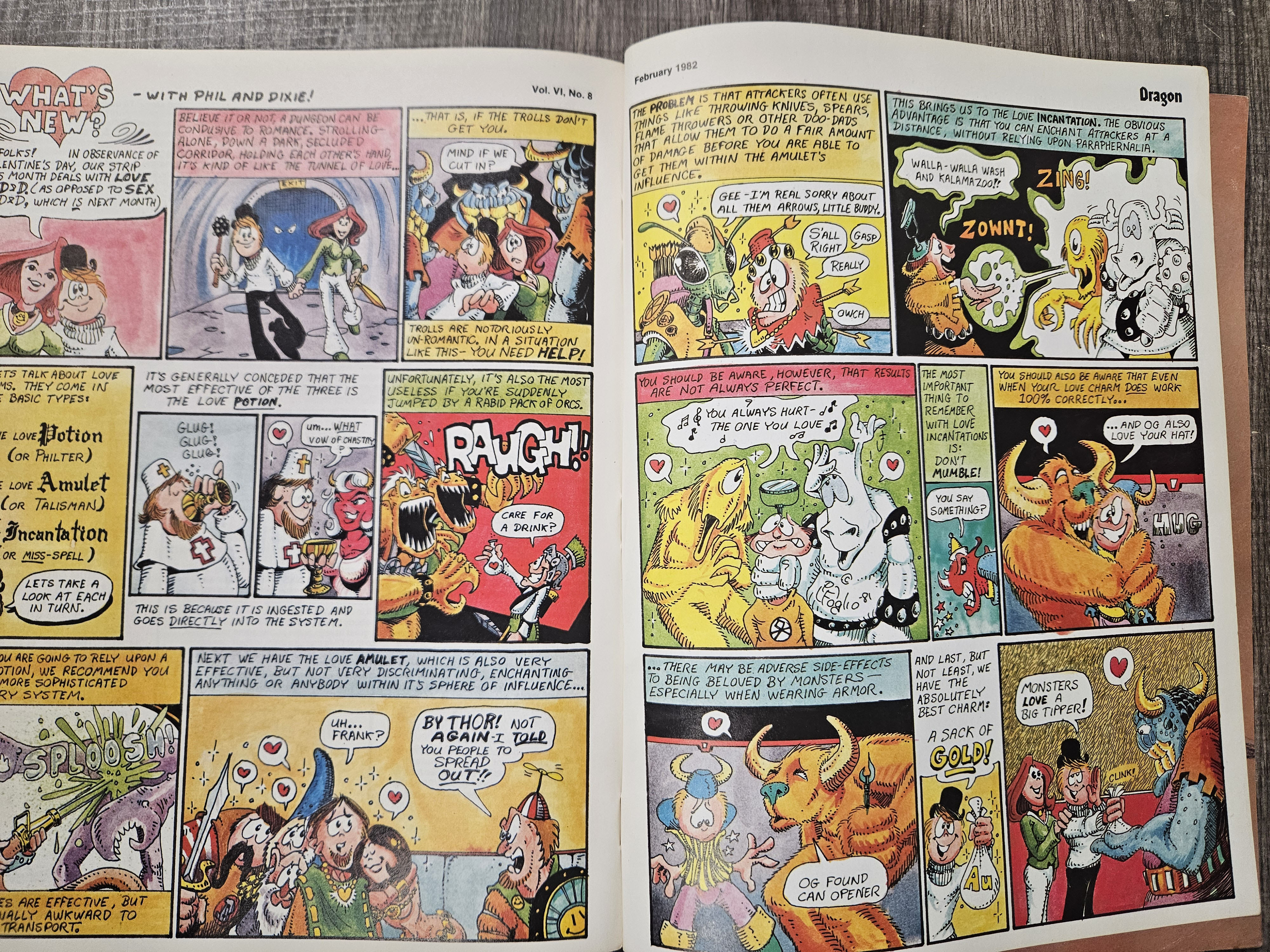
The last pages of each issue were always the comics. This issue featured Phil Foglio’s What’s New with Phil and Dixie, and Dave Trampier’s Wormy – both in color.
Conclusion
It’s hard to explain how important Dragon magazine was for D&D players in the US in the early 80s. Without the internet, we typically only knew our friends and maybe another group or two in town. If you were lucky you might go to a small convention once per year, but at that time no game stores in our area (New England) had tables for gaming. Dragon was the lifeline we had to know what was going on in the rest of the hobby.
What do you think? Do you remember anything particular from Dragon magazine? Let us know!
About the Author